It was 2003. I was a university student immersed in Digital Humanities. I was grappling for the first time with concepts of authorship and the fluidity of digital media.
While studying the shifting relationship between "read-only" and "read-write" cultures, I had a specific and vivid intuition. I realized that the gap between consuming a blockbuster film and playing a video game was destined to collapse. I hypothesized that in the future, gamers would not just consume interactive worlds. Instead, they would generate cinematic experiences on par with the Triple-A movies of the early 2000s.
At the time, I lacked the vocabulary to fully articulate this vision. The technology to build it simply did not exist. But the intuition remained. It ran in the background of my career like an open application waiting for an operating system update.
Twenty years later, the update has arrived.
The Birth of the Player
The world is obsessed with the technicalities of Generative AI. Talking about "prompt engineering," parameters, and syntax optimized to re-create yesterday's format. However, I believe this is a temporary misunderstanding of what is actually happening.
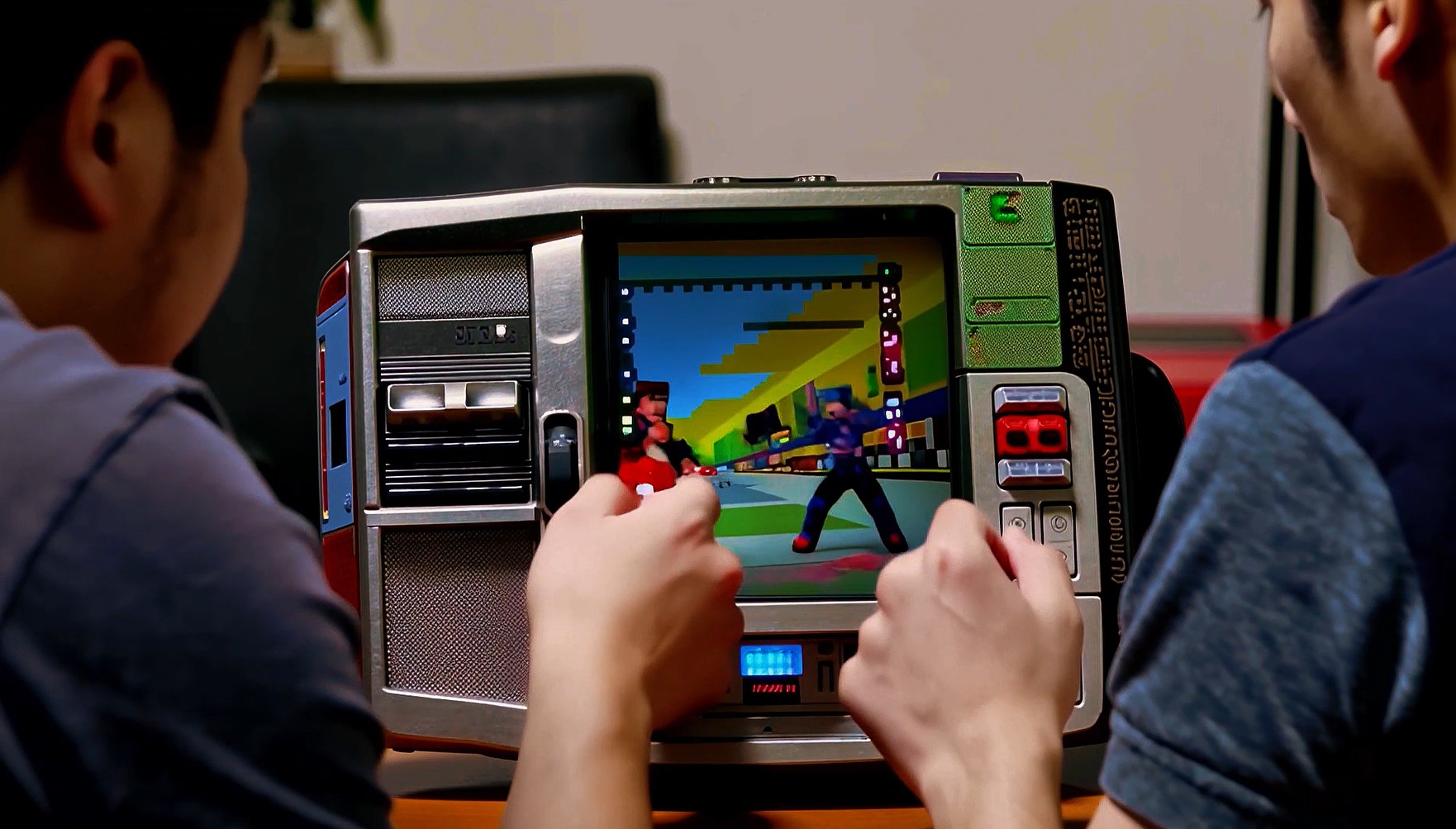
Creating video with AI is not engineering. It is gaming.
The feedback loop of modern generative models mimics the reward systems of video games. The AI anticipates our desires and offers visual rewards that urge us to continue. We are not "operating" a tool in the traditional sense. We are playing with a probabilistic engine that reacts to our input.
In this new paradigm, I have identified two distinct modes of "gameplay" that define my professional and artistic practice today.
Mode 1: The Walking Simulator (Artistic Practice)
When I create for myself and explore the latent space of a model, I am playing a Walking Simulator.
In this mode, there are no objectives, no scores, and no enemies. I wander through the machine's hallucinations just to see what lies over the next digital hill. I look for the glitch, the unexpected derailment, or the "hallucination" that reveals something new.
I let the model make mistakes. In fact, I encourage it. This is where the media archaeologist in me thrives. I dig through the noise to find artifacts of a reality that doesn't exist yet. It is a process of pure discovery.
Mode 2: The Puzzle Game (Commercial Practice)
When I work on commercial projects or commissions, the genre shifts. It becomes a Puzzle Game.
Here, there is a specific desired outcome. It might be a client’s vision, a storyboard, or a specific message. The "game" is no longer about wandering. It is about problem-solving. I have a chaotic set of tiles provided by the AI's raw output, and I must force them to fit together into a coherent picture. I use the same tools, but I apply a completely different cognitive approach. It becomes precise, analytical, and goal-oriented.
The Future of the AI video "Pro-Gamer"
If video creation is becoming a game, then the economy of video creation will soon resemble the economy of gaming.
Millions play football, yet few play in the Champions League. Similarly, millions stream on Twitch, but few make a living from it. AI video will democratize creation. Everyone will be able to play because the barrier to entry is gone.
However, building a sustainable career will require a specific kind of mastery. In gaming terms, this will be about understanding the "Meta" (meta-game or also Most Effective TacticAvaiable).
But there is a crucial difference. In traditional video games, a wrong move leads to a "Game Over." In Generative AI, the system never breaks. It always answers. There are no wrong moves, only divergent outcomes.
Therefore, mastering the Meta in AI video means understanding the unique idiosyncrasies of each specific model. The true AI video "Pro-Gamer" knows exactly how a model’s specific flaws can advance the narrative they are orchestrating. Simultaneously, they know how those same "limitations" can unlock visual worlds that no human could have imagined.
Closing the Loop
Looking back at that afternoon in 2003, I realize I haven't been waiting for the technology to catch up. I have been preparing for it. My background in theater, photography, and complex systems was the tutorial level.
Now, the game has truly started. And I am ready to play.